

Scotty’s Diner in Milford gets a lot of take-out orders, but those have looked a little different lately.
“They’ll call in 40 cheeseburgers, 40 french fries. That’s big for us,” owner Melissa Wunderlich said, laughing. “We’re like, ‘Hey, give us an hour.’”
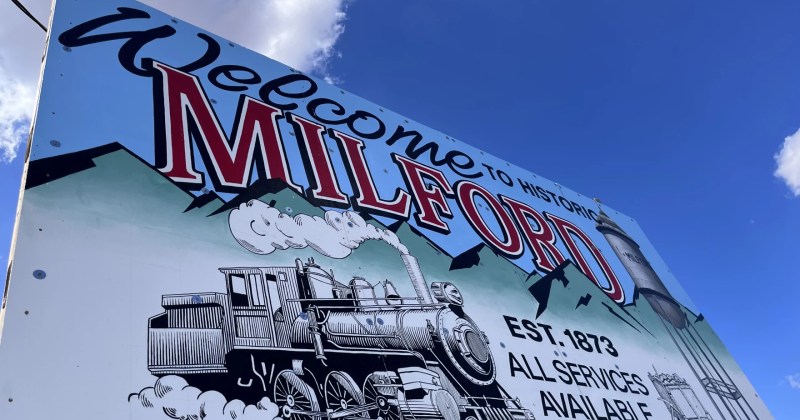
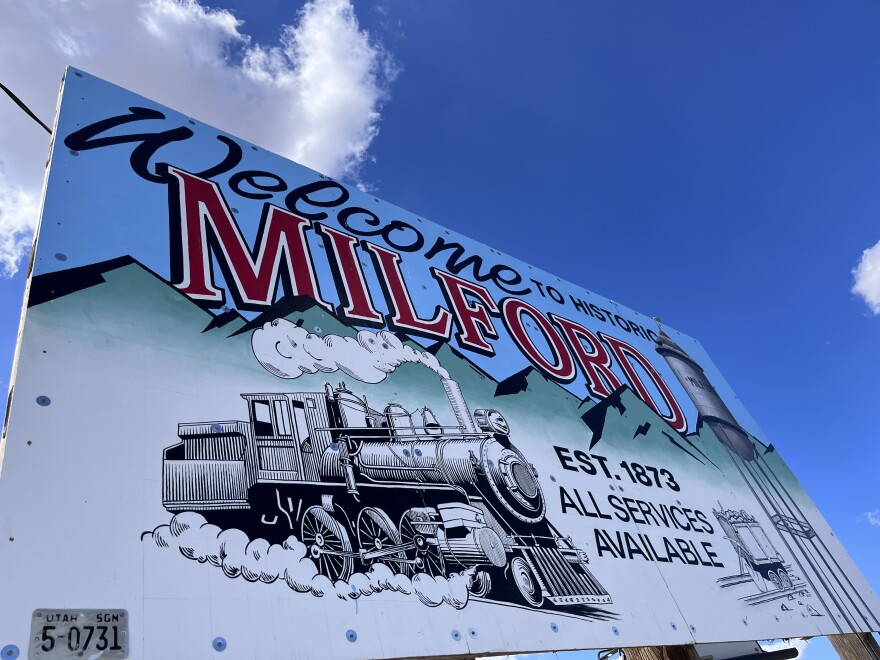
Milford is a rural town of around 1,400 people in southwest Utah’s Beaver County. You can count the number of restaurants on one hand.
Since opening the diner two years ago, however, Wunderlich has had to double her staff to keep up with demand for those burgers and fries.
“From the get-go, we’ve been super busy,” she said. “And I think it’s because of the geothermal thing.”
That “thing” is the world’s largest enhanced geothermal project, which is being built just north of town. For local business owners, the workers coming to Milford for construction have provided a big boost.
Texas-based company Fervo Energy broke ground on the project called Cape Station last year. Once completed, it’ll generate electricity by warming water in hot underground rock and using the steam to turn turbines. Fervo recently signed a landmark deal to send much of that power to a giant electric utility in California starting in 2026.
This type of renewable energy could help with lofty goals like cutting emissions and curbing climate change. It also creates a landing spot for workers leaving the fossil fuel industry — people like Eric Williams, who moved to this part of Utah from California to work at the Fervo site.
He now oversees safety at the project, which has borrowed some technology and techniques similar to what’s used to drill for fossil fuels.
“You say you work in the oil and gas industry. Sometimes people go, ‘Ehhhh,’” Williams said, grimacing. “But when you say geothermal and when you say renewable, sustainable … a lot of people go, ‘Wow.’”
As the project ramps up over the next year and a half, Milford will welcome a lot more workers like Williams — 200 construction jobs total.
The geothermal plan marks the latest chapter in Milford’s long history of economic ups and downs.
First, there was mining. Then came the railroad. When Mayor Nolan Davis moved to Milford to work at Union Pacific in 1979, he said the rail company employed more than 200 people in town.
By the time he retired three decades later, layoffs had cut that workforce by more than half. Things felt pretty bleak, he said.
“I made the comment, ‘I’m ready to turn the lights out,’ Davis said. “Our stores were closing down. We went from three cafes, four clothing stores, two grocery stores … we went down to hardly nothing.”
Fortunately, he said, a new industry arrived to help Milford carry on: pig farming. In 2022, however, the company paying for those hog houses — global food giant Smithfield — announced it was leaving Milford, too.
So, the town’s future was once again thrown into uncertainty — until the geothermal news.
“I was turning somersaults,” Davis said.

Welcoming a cutting-edge renewable energy project might seem like a big shift for a community that has typically dealt with farms, mines and trains. And there are folks who remain hesitant about the growth it’ll bring, Davis said.
“The poor world’s changing, and so we want to hang on to what we have,” he said. “But we’ve still got to have something to sustain the community. You can’t just say, ‘No, everybody stay away,’ because pretty soon you’re going to end up with a ghost town.”
Milford doesn’t want to put all its eggs in the geothermal basket, either. After all, the 200 construction jobs are temporary. Fervo estimates there will be 15 to 30 permanent jobs when the site is up and running.
So, local leaders are looking to diversify the economy by adding other types of jobs, too — things like agricultural tech, service industries and tourism.
“We want to be mindful — as we look to the growth of what Fervo is doing — that we are not making the same mistakes that our predecessors made,” Beaver County Strategic Development Director Jen Wakeland said. “So that we can level out some of those peaks and valleys.”
As you might imagine, adding hundreds of workers to a town this size also creates immediate challenges.
First and foremost: Where will they live? The community is still figuring that out.
“What does that look like? A headache,” Davis said. “It’s a challenge that can’t be handled just by Milford City. It’s got to be handled countywide.”
Milford has scouted a couple of potential sites where new housing subdivisions could be built. Workers who don’t live there might stay in RVs nearby or commute from other communities, such as Cedar City or Beaver.
No matter what the future looks like, Wakeland said the main thing is making sure economic growth actually helps the people who call Milford home.
“We don’t want just the jobs and the money. We’ve had ‘just the jobs and the money’ and that went away. We want to build this community,” she said. “We can show the metrics and all the dollars and figures. … I don’t know that that’s as important as the kids being able to walk down to the pharmacy and buy a milkshake.”
Or something off the menu at Scotty’s.
At the diner’s small pick-up window, Melissa Wunderlich pointed out some of the most popular menu items, including a deep fried pickle and a patty melt named after her dad.
She was born and raised in Milford, so it feels a bit strange to watch her community change from behind this counter.
“On a daily basis, we’re like, ‘Half the people we just waited on — we don’t even know who they are,’ Wunderlich said, “which is crazy for a small town like this, because before you knew everyone.”
But she’s thankful those changes have helped local businesses like hers thrive in a time when many rural communities nationwide face hard times.
People in Milford want to keep their small town “small-town,” she said. They also want their kids to be able to someday get a job here that allows them to stay.
If geothermal might make that possible, it’ll be a welcome neighbor.

 Five County Association of Governments Economic Development